

The first time my mom called me about the family business, I almost didn’t answer.
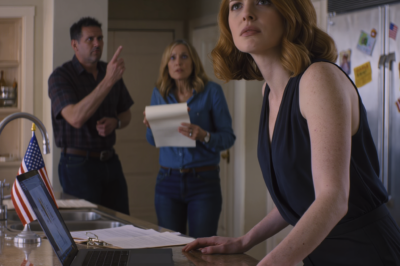
Her name lit up my screen while I stood in my kitchen, staring at the small American flag magnet on my fridge—the cheap souvenir kind you pick up at a gas station off I‑95. The late-afternoon sun slanted through the blinds and striped the counter in pale gold. Somewhere in the building, a neighbor was playing Sinatra low enough to feel like a memory instead of music. My iced tea sweated beside my laptop, and I watched the phone buzz like it was daring me to pick up.
I didn’t. Not right away.
Because I was thirteen when I realized my family had already decided who mattered.
My name’s Logan. I’m thirty-one now. And if you’d asked me back then what kind of family I came from, I probably would’ve said normal. I would’ve told you my parents were hardworking, that we had dinner together most nights, that my dad owned a company and my mom kept the house running like clockwork.
But looking back, the signs were always there.
Subtle at first—like how my achievements were “nice,” while my younger sister, Haley, got full-on dinner celebrations for every minor trophy.
Or how my parents always seemed a little too quick to drop everything for her dance recital while I’d sit alone at my soccer games, scanning the bleachers, thinking maybe they got stuck in traffic again.
They didn’t.
They just didn’t come.
Haley’s two years younger than me. And to be fair, she was gifted. The kind of kid who sparkled on stage, who could walk into a room and draw every pair of eyes without trying. She had the charm, the grace, and the uncanny ability to cry on cue—which worked disturbingly well when she needed to get out of trouble or quietly nudge blame in my direction.
My parents, Lisa and Craig, were absolutely smitten with her.
Not just in a proud-parent kind of way.
More like they saw her as some kind of golden investment.
At first, I didn’t mind. I wasn’t the type to compete for attention. I liked tinkering with electronics, building stuff in the garage, learning how things worked.
While Haley was perfecting pirouettes and getting standing ovations at the school play, I was wiring old computers back to life and making small cash fixing phones for neighbors.
I was proud of my little projects.
But my parents never really looked up from Haley long enough to notice.
And when they did, it was usually to say something like, “That’s nice, Logan, but don’t spend too much time on that stuff. You don’t want to burn out before you even get to college.”
College.
That became the line in the sand.
Haley was groomed for it.
Elite summer programs.
Tutoring.
Prep courses starting freshman year.
Me?
I was told to be realistic and consider trade school.
Nothing wrong with trade school, of course.
But it wasn’t my dream.
I wanted to study engineering, maybe even start a tech company someday.
But whenever I mentioned it, I got the same response.
A tight-lipped smile.
And a lecture about not everyone being cut out for big dreams.
It stung.
But I pushed through.
I figured if I just proved myself, they’d come around.
So I kept working.
Fixing things.
Learning to code.
Teaching myself software design from old manuals and YouTube videos.
I built my first app at sixteen.
It was clunky.
Ugly.
Barely worked.
But it was mine.
I remember showing it to my parents, expecting something.
Interest.
Curiosity.
Maybe even pride.
Instead, my mom glanced at her phone halfway through and said, “You know, Haley’s team might qualify for nationals this year. Isn’t that exciting?”
That was the first time I didn’t answer.
I just nodded and left the room.
Here’s the promise I made to myself without saying it out loud: one day, I’d stop auditioning for my own family. One day, I’d let the results speak so loudly no one could talk over them.
The older we got, the worse it got.
By the time Haley was applying to Ivy League schools with a team of private consultants and a vision board, my mom practically micromanaged.
I was taking night classes at a community college and running a growing repair business out of the basement.
I was pulling in more money than I’d expected—enough to buy my own beat-up car and start saving.
But my parents still treated it like a hobby.
Like I was just spinning my wheels until I figured out something real to do.
The moment that really hit me, though, was when Haley got into Columbia.
Big moment, right?
I congratulated her sincerely.
I mean that.
And the whole family threw this massive dinner party.
Friends.
Extended relatives.
Catered food.
Sparkling drinks for the adults.
And somewhere between the speeches and the toasts, my dad stood up, clinked his glass, and said, “We always knew Haley would do something special.
“She’s the kind of person who can lead a company someday.
“Maybe even take over the family business.”
I froze.
The family business.
My dad owned a small but successful logistics company—something he built in his twenties. He used to tell me stories about working nights, hustling for contracts, sleeping in his truck.
I always assumed he wanted to pass that on to me one day.
We talked about it when I was younger.
I thought… I thought I’d earn it.
I looked at him that night, searching for some kind of signal that he hadn’t just erased me from the future of our family.
But he didn’t even look in my direction.
He just raised his glass toward Haley, who was beaming like a Broadway star.
I didn’t say anything that night.
Didn’t make a scene.
But something inside me cracked.
Not in a dramatic way.
More like a quiet shift.
Like finally accepting a truth you’ve been trying not to see for years.
They’d already decided.
I was just the background noise to Haley’s spotlight.
Over the next couple of years, that truth kept unfolding.
My parents funneled money into Haley’s tuition.
Her off-campus apartment.
Even helped her launch a little fashion startup on the side.
I asked for a small loan once to upgrade some servers for a client project, and they said they were tight on cash right now.
I didn’t ask again.
I took on extra work instead.
Started skipping sleep.
Grinding harder.
I got smarter about business.
Built relationships with developers.
Took online certifications in design and AI systems.
Slowly, my side hustle evolved into something real.
I still went to family dinners.
Still played the role.
But I stopped expecting anything from them.
They didn’t notice the change.
Not really.
As long as I smiled, said, “Congrats, Haley,” and kept my mouth shut, I stayed invisible.
But then came the pivot.
The twist that set everything else in motion.
Three years ago, my dad called a family meeting.
I remember it clearly because it was the first time in forever that he said he wanted to talk to me about the business.
My heart actually leapt a little.
I thought—maybe—maybe he saw me finally.
But no.
He said he was retiring early and wanted to transition the company into a new era.
That’s how he phrased it.
Said he’d been thinking hard about who should take over.
And after careful consideration, he decided it was time to bring Haley in as CEO.
She’d been learning leadership at school, understood branding, and had natural charisma—things he claimed were more important now than logistics or operations.
I asked calmly what would happen to the management team.
To the systems.
To the staff who’d been with the company for decades.
He said, “They’ll adapt. It’s time for fresh blood.”
“And me?” I asked.
He smiled like he pitied me.
“Logan, you’re doing well in your own way. But this just isn’t your lane.”
That line.
It stuck with me like a splinter under my skin.
Haley took over and, predictably, everything started falling apart.
At first, it was slow.
A few clients lost.
Some staff left.
She brought in her college friends to modernize operations.
Let go of old hands who’d built the company from the ground up.
Rebranded with a shiny new logo and a bizarre mission statement that sounded like it was generated by a chatbot trying to be quirky.
The numbers started dropping.
Vendors got frustrated.
But my parents?
They kept defending her.
“She’s finding her footing,” they said. “She just needs time.”
I stayed quiet.
Focused on my own projects.
My business had evolved into a full-fledged tech consultancy by then, with five employees and clients across three countries.
But I didn’t brag.
Didn’t gloat.
Still, I watched.
I watched as Haley ran the company into the ground while my parents doubled down on their faith in her—even when the cracks were clearly showing.
And then, a few months ago, I got a call from my mom.
She sounded tired.
Shaky.
“Logan,” she said, “we need to talk. It’s about the business.”
I leaned back in my chair, staring at the charts on my second monitor. One of my newest contracts had just cleared for seven figures, but I didn’t mention that.
“Okay,” I said. “What’s going on?”
There was a pause.
A long one.
“It’s bad. Haley made some mistakes. Big ones. The company’s in trouble. We’re trying to figure out how to keep the lights on.
“We were wondering if you could come by and maybe take a look.”
That was the moment.
The moment everything started to shift.
I said nothing at first.
Just let the silence stretch.
Because part of me wanted to help.
Despite everything, they were still my family.
But another part—an older, sharper part—remembered all the times they chose her.
All the times I was told to stay in my lane.
All the dinners I spent smiling while they toasted her success like I didn’t exist.
And now.
Now they were calling me.
Begging.
That’s when I realized they hadn’t just underestimated me.
They’d forgotten I existed.
And now.
Now they were remembering at the worst possible time.
But the thing is, I wasn’t the same Logan they pushed aside.
And I had no intention of saving them quietly.
I didn’t go over to their house right away.
Not because I was trying to be dramatic.
Because I needed to feel that they needed me.
After years of being the afterthought.
The shadow.
And Haley’s spotlight.
It felt strange having them reach out first.
My mom sent a follow-up text the next day.
Logan, I know you’re busy, but this is serious. Dad is worried. We could really use your insight.
I almost laughed.
Insight.
As if I hadn’t been quietly building my own empire while they poured every resource into my sister’s vanity projects.
Still, I agreed to come by later that week.
I didn’t wear a suit.
Just jeans and a hoodie.
I wanted to remind them that I was still me.
The version they decided didn’t look like success.
My mom opened the door, looking five years older than I remembered.
Her hair was tied in a messy bun.
Eyes puffy like she hadn’t slept in days.
“Logan,” she said, pulling me into a hug. “It’s really bad.”
The living room looked the same.
But the energy was off.
My dad was sitting stiff on the couch, staring at a folder like it was full of death certificates.
And Haley.
She wasn’t even there.
Apparently, she was meeting with a branding coach that afternoon.
Which, according to my mom, was crucial.
“She’s still trying to be optimistic,” my mom explained, wringing her hands.
“But we’ve lost three major clients in the last two months.
“Payroll bounced last week.
“And… well, the bank froze our credit line.”
I kept my face neutral.
Inside, I felt a mix of things.
Pity.
Vindication.
Even a sliver of guilt.
But mostly I felt detached.
Like I was watching a documentary about people I used to know.
They laid it all out for me.
Haley had taken over two years ago.
At first, she was full of energy and grand ideas—rebranding the company, switching to trendy new logistics software that no one in the warehouse could understand.
She let go of the operations manager—someone who’d been with my dad since year one—because he wasn’t vibing with the new culture.
She’d hired her college roommate to handle vendor contracts, which ended in a messy dispute.
And she was bleeding money on useless influencers to elevate the company’s image.
I flipped through the reports.
Red.
Red.
Red.
“And you let this happen?” I asked flatly, looking between them.
My dad didn’t meet my eyes.
“We thought she just needed more time. She’s under a lot of pressure.
“You know how hard it is for women in business.”
That nearly made me choke.
I’ve worked with brilliant women.
Driven.
Competent.
Creative powerhouses.
Haley didn’t lack opportunity.
She lacked accountability.
They asked if I could look into the back-end systems, maybe recommend someone to help.
But I could tell what they were really asking.
They just didn’t want to say the words yet.
Not out loud.
After two hours, I told them I’d think about it.
That I’d need access to some files and admin dashboards if they wanted a real assessment.
They agreed instantly.
My dad even muttered something like, “We should have brought you in earlier.”
It was the closest thing to an apology I’d ever get.
When I finally saw Haley the next week, she barely acknowledged me.
“Oh, hey, Logan,” she said, flipping her sunglasses onto her head. “You’re here to do IT stuff, right?”
I looked at her.
Waiting.
She smirked.
“Don’t worry. I won’t get in your way.
“I know it’s more your speed.”
She still saw me as the nerd in the garage.
Fiddling with wires while she conquered the world.
But the world she built was burning.
And she hadn’t even noticed the smoke.
Over the next few weeks, I dug in.
And what I found was worse than I expected.
Haley had misclassified employees as contractors, leading to a mountain of back taxes.
She defaulted on multiple service contracts.
There was a $60,000 marketing campaign that led to zero return because the influencer she’d hired turned out to have a messy reputation.
The CRM was a mess.
Orders were falling through the cracks.
And somehow she was still drawing a six-figure salary and expensing luxury handbags as client gifts.
I put together a twenty-page report.
I outlined immediate threats, midterm recovery options, and long-term strategic pivots.
I color-coded everything.
My team—yes, I had a team—helped mock up automation tools that could streamline their process and cut costs by forty percent within three months.
I sent it to my dad and said we should meet in person.
When I showed up that Saturday, Haley was there.
“I read your little report,” she said before I even sat down.
“Cute.
“Very spreadsheet.”
“Haley,” my mom flinched. “Please.”
“No, I mean it,” she continued, arms folded. “It’s all so logical. So binary.
“But business isn’t just numbers, Logan.
“It’s about vision and relationships and storytelling.”
“Haley,” I said calmly, “your storytelling lost the company $300,000 last quarter.”
She rolled her eyes.
“You’re just bitter. You always have been.
“This isn’t about saving the company.
“It’s about you trying to prove something.”
I looked at my dad.
At my mom.
Waiting for them to step in.
They didn’t.
So I stood up.
“You’re right,” I said. “This isn’t about proving anything.
“Because I already did.
“I built something on my own. I don’t need your validation.”
I turned to my parents.
“But if you want this company to survive, she can’t be in charge.
“Not even on paper.
“I’ll help, but only if I have full control.
“Operational.
“Financial.
“Legal.”
Haley gasped like I’d slapped her.
“You’re not serious.
“You want them to just hand it over to you.”
“No,” I said. “I want them to save it.
“You ran it into the ground.
“I’m offering to fix it.”
For a moment, no one said anything.
Then my mom stood.
“Maybe we should talk about this calmly.”
“No,” I said. “It’s not a discussion.
“It’s a decision.”
My dad looked torn.
His pride in Haley was written all over his face.
But so was the exhaustion.
The fear.
And then Haley said the thing that finally snapped the last thread of goodwill I had left.
“If you do this,” she said, pointing at me like a child, “I’ll tell everyone you set me up.
“That you planted bad information.
“I’ll go public, Logan. I have followers.
“You don’t get to erase me just because you’re jealous.”
The room went dead silent.
And my mom actually looked scared.
That’s when I realized they knew.
Maybe not everything.
But they knew she was volatile.
Knew she was careless.
And they let her do it anyway.
Because they were too scared of breaking her perfect golden-girl image even as the house crumbled.
“I’m done,” I said quietly. “If you want my help, I want it in writing.
“Full authority.
“I’ll have my lawyer send over a draft.
“You’ve got forty-eight hours.”
There it was—my number, my line in the sand. Forty-eight hours. The same amount of time I’d spent, back at sixteen, waiting for a “good job” that never came.
Haley laughed, but there was no real sound in it.
Just air.
And desperation.
“You think you’re better than me?” she whispered.
“No,” I said, walking toward the door. “I know I am.”
And then, just before I stepped out, my mom called after me.
“Logan, please don’t walk away from us.”
I paused.
But I didn’t turn around.
Because after everything, they still hadn’t said what needed to be said.
And until they did, I wasn’t coming back.
I didn’t cry when I left that house.
I didn’t scream.
I didn’t throw things or call my best friend or drown myself in whiskey like some dramatic movie character.
No.
I drove home in silence.
Windows down.
Letting the cool wind numb my face.
When I got back to my apartment—a minimalist space with more servers than furniture—I sat on the edge of my bed and stared at the wall.
It was a weird feeling.
Not quite anger.
Not quite sadness.
Just empty.
I guess I’d always held on to this tiny hope that maybe one day things would balance out.
That my parents would see me.
Not just glance at me.
Not just remember to send a birthday text.
Really see me.
As someone capable.
As someone worthy.
But what Haley said that day—and how quickly they let her say it—stripped that illusion clean off.
They weren’t going to choose me.
They never had.
And it was time I stopped waiting around like some backup quarterback, hoping to get called off the bench.
For the first week after that blowout, I didn’t do much.
My team at the consultancy picked up the slack.
I had automated a good chunk of the admin side.
Our client base was stable.
We were okay.
I was okay.
But inside, I felt like I’d been cracked open.
Not destroyed.
But definitely peeled back to something raw.
Exposed.
On day eight, I pulled out an old composition notebook from high school.
The cover was frayed.
Corners bent.
Inside were sketches.
My original ideas for an app I’d once dreamed of building.
It was dumb, maybe—just a tool to help small businesses track their inventory across different platforms.
Back then, I didn’t have the skill to make it real.
Now I did.
That was the moment something clicked.
If I was going to rise, it had to be on my terms.
No more waiting for their approval.
No more trying to prove anything to people who only knew how to look past me.
I stayed up that night until four a.m. mapping out version 2.0.
No distractions.
No second-guessing.
Just pure focused work.
It felt good.
Familiar.
Like coming home to a version of myself I hadn’t visited in years.
That same week, I met with a mentor—someone I’d known through a tech incubator years ago.
Her name was Camille.
Ex‑Google.
Now investing in underrepresented founders.
I told her I wanted to pivot.
Build something scalable.
Not just fix broken systems for other people.
Create my own.
She listened.
Asked questions.
Took notes.
Then she said something that stuck with me.
“They underestimated you. That’s their loss.
“But don’t make it yours, too.”
So I got to work again.
My consultancy team thought I was nuts at first.
Shifting our focus meant we’d lose some steady revenue.
But I had enough saved to keep us afloat for six months.
Maybe more.
And I’d rather gamble on myself than keep cleaning up other people’s messes forever.
We started small.
Just me.
An engineer named Eli.
A UX designer named Marcy.
We met every day in my apartment.
No whiteboards.
No ping-pong tables.
Just laptops.
Coffee.
And furious brainstorming.
The product was simple in theory.
An intuitive AI-powered logistics platform for small to midsized businesses.
One that could learn patterns, suggest solutions, and cut overhead costs in half without needing a dedicated IT team.
I called it Glass Line.
Because it was built to make the invisible visible.
Every shipment.
Every delay.
Every dollar.
And something about that name felt personal.
The first version launched in six months.
It wasn’t perfect.
But it was clean.
Fast.
And best of all—it worked.
We got beta users through LinkedIn connections.
Word of mouth spread fast.
By the end of year one, we had over three hundred businesses using it.
I didn’t take a paycheck the entire time.
I lived modestly.
No vacations.
No shopping sprees.
No flashy car.
Just me building something real while everyone else still thought I was just some basement tech guy who didn’t understand the bigger picture.
Occasionally, I’d get updates through the grapevine.
My parents never reached out directly.
But I still had cousins who talked.
They said the family company was hemorrhaging clients.
Haley had apparently doubled down on some influencer campaign that backfired.
And she’d started blaming “negative energy” from old staff for the drop in revenue.
Classic Haley.
I didn’t engage.
Didn’t comment.
Just listened.
Nodded.
Went back to my work.
But then something interesting happened.
Sixteen months after our launch, Glass Line was featured in a mid-tier business magazine as one of ten startups reshaping logistics.
A few weeks after that, we got our first acquisition offer from a competitor I’d admired for years.
I turned it down.
Not because I didn’t want the money.
Because it wasn’t time yet.
I wasn’t building this just to cash out.
I wanted it to grow.
To last.
To be the thing people remembered me for.
Not the kid fixing phones in the garage.
Not the guy who got passed over for a failing CEO.
But Logan Shaw.
Founder of Glass Line.
A month later, I got a text from my mom.
Logan, can we please talk?
I stared at it for a long time.
The next morning, I got a call from my dad.
I didn’t pick up.
But then something shifted.
I got an email.
Official this time.
Sent from the family company’s domain.
It was a formal request to consult on a last-ditch restructuring plan.
They were finally using the word I’d waited years to hear:
Help.
Not because they wanted to be kind.
Not because they saw me.
Because they were drowning.
The business was on the brink.
Vendors were walking.
A legal claim had been filed by a former warehouse manager who said he’d been pushed out unfairly.
Haley had apparently left town for a “spiritual retreat” and wasn’t answering emails.
And their accountant—who I vaguely remembered as a guy named Dennis who smelled like cough drops—had resigned mid-quarter and left no notes.
They didn’t just want me to help.
They wanted me to save them.
And for a brief moment, I almost said yes.
Not because they deserved it.
Because the company did.
There were still employees there.
People I remembered from holidays and company picnics.
People who had once handed me snacks and patted my head and said, “You’re going to be just like your dad someday.”
But then I read the last line of the email.
We hope you’ll consider this. Haley did her best. Please understand. This wasn’t her fault.
That was the nail in the coffin.
Even now.
Even now.
They couldn’t admit the truth.
Couldn’t call it what it was.
So I didn’t reply.
Instead, I forwarded the email to Camille and asked her to set up a meeting with our legal counsel.
If they were serious about a handover, it wasn’t going to be a casual favor.
I was done doing things out of guilt or hope.
I had built something they never believed I could.
And now that it was standing taller than the empire they gave away to Haley—now they wanted back in.
But I was no longer the kid waiting in the wings.
I was the one holding the curtain open.
And they were about to find out just how much that stage had changed.
It was strange how calm I felt drafting the email.
No bitterness.
No adrenaline rush.
Just quiet clarity.
Camille sat across from me in the co-working space we’d upgraded to after closing our first big round of funding.
The room was bright.
Modern.
Full of glass walls and warm lighting.
The kind of space I used to dream about when I was coding from a rickety desk in my bedroom with takeout boxes stacked beside me.
Now it was real.
Mine.
“I’m not doing this out of spite,” I told her as I hit send.
“I know,” she said. “But you’re also not doing it out of guilt.
“And that’s important.”
She was right.
For the first time, I wasn’t reacting to my family.
I was responding to reality.
With precision.
With leverage.
With power.
The letter I sent wasn’t aggressive.
It was professional.
I addressed it to both my parents, outlining the potential acquisition of their company by Glass Line Technologies Incorporated.
It wasn’t a consultation offer.
It wasn’t a proposal for shared leadership.
It was a buyout offer.
With terms attached.
Complete operational control.
Full ownership transfer within thirty days.
All decision-making authority shifted to me and my executive board.
Haley removed from any leadership or ownership role permanently.
It wasn’t about punishment.
It was about protecting the business from further damage.
And protecting my own name from being associated with their mess—unless I had full control.
I sent it.
Closed my laptop.
And didn’t think about it again for the rest of the day.
I had other meetings.
Other projects.
Glass Line was in talks with a major shipping chain that wanted to pilot our tracking software across their regional centers.
I couldn’t afford to get emotionally tangled again.
But later that night, the response came.
Not from my mom.
Not from my dad.
From Haley.
The subject line:
This is war.
The email itself was a rant.
Paragraphs of blame.
Denial.
Twisted logic.
She accused me of manipulating our parents.
Of preying on a vulnerable moment.
Said I was trying to erase her legacy and steal something that was never mine to begin with.
My favorite line, though:
You were never meant to lead, Logan. You just waited in the shadows long enough for something to fall into your lap.
I stared at that line for a long time.
Because for a moment, I believed it.
Not because it was true.
Because it had been fed to me for so long.
The same script.
Over and over again.
You’re not a leader.
You’re not special.
You’re not Haley.
But then I remembered the nights I stayed up coding while Haley partied.
The years I spent building something real while she crafted social captions for pretend brands.
Every invoice I’d chased.
Every bug I’d fixed.
Every investor who told me no until they finally said yes.
Nothing fell into my lap.
I built this.
Brick by brick.
So I didn’t reply to her email.
I forwarded it to my lawyer and filed it under hostile communications.
If she wanted war, I’d meet her with silence and strategy.
The next few days were a blur of planning.
My legal team got to work drafting a formal letter of intent.
Camille and I met with our CFO and finance advisers to determine the ceiling for a strategic buyout.
I didn’t want the company because I missed my family.
I wanted it because it had value.
If salvaged properly.
The logistics infrastructure was still solid.
The branding was a mess.
The client relationships burned.
But the bones of the business were there.
It could be rebuilt.
With the right leadership.
I started reaching out to old staff members quietly.
The ones Haley had pushed out when they didn’t align with her aesthetic.
They were wary at first.
Hesitant to talk.
But once I explained what I was doing, the responses changed.
One by one, they offered to come back.
With conditions, sure.
But the trust was there.
They remembered me.
Not as the kid who used to hang around the office on half days.
As the guy who never talked down to them.
Who asked questions.
Who actually cared about how things worked.
I also tapped my CTO, Eli, to review the failing back-end systems at the family company.
He built a clean demo that showed exactly how our Glass Line platform could replace the outdated infrastructure and save hundreds of thousands within a year.
It wasn’t just about taking over.
It was about evolution.
Meanwhile, Camille pulled strings with a few silent investors who were interested in expanding our reach.
They didn’t care about the family tension.
They cared about return.
And if I could secure the acquisition, it would open doors into a different market segment entirely.
Things were falling into place.
But then came the curveball.
My parents requested a meeting.
Not over email.
Not through lawyers.
In person.
At our office.
Not their crumbling one.
At first, I hesitated.
Every instinct told me it was a trap.
Some emotional appeal.
Some guilt trip designed to make me flinch.
But Camille convinced me to take it.
“You don’t have to agree to anything,” she said. “But power isn’t just about winning.
“It’s about showing up on your terms.”
So I said yes.
They arrived late.
My mom looked tired.
More than before.
Her blouse was wrinkled and there was a visible stain on her sleeve.
My dad looked smaller.
Not physically.
Emotionally.
Like the years had finally caught up with him.
They sat across from me in the glass conference room, sunlight casting clean lines across the table.
“You’ve come a long way,” my dad said, eyes scanning the space.
“I have,” I said simply.
“Why are we here?”
My mom spoke first.
“We read the offer, and we’re not ready to sign over everything.”
I waited.
Said nothing.
“But,” she continued, “we’re willing to give you partial control.
“A transition period.
“Six months of shared leadership.
“We think that’s fair.”
I nodded slowly.
Then stood up.
“Meeting’s over.”
“What?” my dad said, startled.
“You don’t have six months,” I said. “You barely have six weeks.
“Your accounts are redlined.
“Your staff is leaving.
“Haley’s one more bad campaign away from dragging your brand through another public mess.
“And you think this is leverage?”
My mom’s voice cracked.
“Logan, please. It’s still our company.”
“No,” I said. “It was.
“Now it’s a sinking ship.
“And I’m offering you a lifeboat.
“If you don’t want it, that’s fine.
“But don’t pretend you’re still at the helm.”
Silence stretched.
And then my dad whispered something I wasn’t expecting.
“She said she’d take us to court.”
I blinked.
“What?”
“Haley,” he said, not meeting my eyes. “She said if we signed the company over to you, she’d file a claim.
“Say we cut her out unfairly.
“That we destroyed her future.”
I laughed.
Actually laughed.
“That’s rich,” I muttered.
“She destroyed herself.
“I just offered to clean up.”
They didn’t respond.
I softened slightly.
“I’m not here to hurt her,” I said. “I’m here to save what’s left.
“But I won’t do it half-blind.
“I won’t do it with one hand tied behind my back.”
They looked at each other.
My mom wiped her eyes.
Then my dad said quietly, “We’ll talk to the lawyers.”
That night, I stayed up late in the office.
I wasn’t celebrating.
Not yet.
There was too much still at stake.
But something inside me shifted.
For the first time in my life, I wasn’t just fighting for a seat at the table.
I was building the table.
Choosing who sat at it.
What the menu was.
What the rules were.
I had the leverage now.
And I was going to use it.
Not to destroy.
To rebuild.
In my image.
My parents signed the papers exactly twelve days after that meeting.
It happened on a Wednesday morning in a lawyer’s office overlooking the city skyline.
The conference room was quiet except for the shuffling of papers and the occasional click of a pen.
My mom didn’t look at me.
My dad’s hand trembled slightly when he signed the last page.
Haley wasn’t there.
She’d refused to attend, sending a furious email the night before that ended with:
“You’ll regret this.
“You’ll all regret this.”
But I didn’t regret anything.
The moment the deal was done, Glass Line Technologies officially acquired the family business.
Renamed it.
Restructured it.
Began the full-scale transformation.
We called it Shawlink.
Not for ego.
For clarity.
The old company was tainted.
Bloated.
Broken.
Shawlink was clean.
Precise.
Scalable.
And for the first time in its thirty-seven-year existence, it was mine.
The first thing I did was walk through the old building.
It was eerie.
Dusty corners.
Empty desks.
Broken vending machines.
Half the warehouse lights didn’t even turn on.
My dad had once told me this company was his proudest achievement.
But under Haley’s leadership, it had become a husk.
So we gutted it.
Not completely.
Just enough to breathe life back in.
We brought in my team from Glass Line.
They updated the logistics systems, automated half the manual processes, and implemented real-time shipment tracking with predictive delays.
It took weeks of working late.
Weekends included.
But the energy was electric.
Everyone could feel it.
Something big was happening.
I personally rehired five people Haley had pushed out.
The operations manager, Tim, nearly cried when I walked into the diner he worked at and asked if he wanted to come back.
He didn’t even ask about salary.
Just shook my hand and said, “I’ve been waiting for this day for years.”
The staff meetings felt different now.
No more jargon.
No more buzzword-heavy slideshows.
We talked numbers.
Results.
Strategy.
And people listened.
Not because I demanded it.
Because I earned it.
And then came the real moment of payoff.
Three months after the acquisition, we landed a contract with a nationwide medical supplier.
They needed efficient, discrete distribution across twelve states with zero tolerance for delays.
The old company would have buckled under the weight of that request.
Shawlink executed flawlessly.
And just like that, revenue doubled.
Meanwhile, Haley imploded.
After the sale, she tried to rally support online.
Made a long, overly filtered video titled The Truth About My Brother’s Takeover.
Painted herself as the visionary who had been cut down by corporate greed and control.
Her followers—mostly lifestyle fans and wannabe entrepreneurs—sympathized for about a week.
Then receipts surfaced.
Emails.
Invoices.
Internal memos.
Leaks from staff who’d had enough.
Turns out trying to be a CEO while running a fashion blog doesn’t sit well with actual business people.
By the end of the month, her credibility was shredded.
She lost sponsorships.
Her branding coach dropped her.
Even her favorite wellness retreat in Sedona canceled her speaking slot.
She sent me one final message.
Congratulations. Hope it was worth destroying your sister’s career for a stupid warehouse.
I didn’t reply.
Because it wasn’t about her career.
It was about everyone else she’d stepped on trying to build it.
My parents stayed quiet after the sale.
For the most part.
I heard from mutuals that my mom was embarrassed to go to her book club.
That my dad stopped talking about the business at all.
They hadn’t just lost the company.
They’d lost the illusion.
For years, they thought they were shaping a dynasty through Haley.
But they were just propping up a house of cards.
Six months after the acquisition, my dad called.
I let it go to voicemail.
His voice was low.
Worn down.
“Logan, I just wanted to say I saw the article.
“You’re doing something incredible.
“I’m sorry I didn’t believe in you sooner.”
That should have hit me hard.
It didn’t.
Because by then, I didn’t need it.
I’d already won.
Not just the company.
Not just the success.
I won back myself.
The version of me I used to bury for their comfort.
The kid who fixed old phones and drew app sketches in composition notebooks.
The teenager who swallowed his pride every time they said, “Be realistic.”
The man they tried to pretend was just doing okay in his own little way.
He wasn’t little anymore.
He was the reason hundreds of people had jobs.
Families had income.
Vendors were getting paid on time.
And they knew it now.
Everyone did.
We held a relaunch event at the new headquarters.
A modern facility on the outskirts of the city.
It was sleek, energy-efficient, and equipped with tech that made our old warehouse look prehistoric.
Clients flew in from all over the country.
We unveiled our new partnerships.
Presented future expansion plans.
Celebrated the next chapter of Shawlink.
I stood on the main stage at the end of the night.
No script.
No slides.
Just a microphone.
And a packed room.
“I want to thank everyone who believed in the work before the world did,” I said.
“To the ones who stayed loyal.
“Who got back up after every setback.
“Who made something out of nothing.
“We did this together.”
The applause was thunderous.
I stepped off stage and walked out into the cool evening air.
There were stars overhead.
Quiet.
Clear.
And for the first time in years, I wasn’t carrying anything.
No bitterness.
No need for revenge.
Just peace.
And that, I think, was the real win.
Because in the end, they didn’t just underestimate me.
They handed me the keys to prove them wrong.
And I did it silently.
Relentlessly.
Without permission.
But on my terms.
As I drove home that night, my phone buzzed again—another missed call I didn’t need to answer. I set it facedown on the passenger seat, and when I walked into my apartment, the first thing I noticed was that little American flag magnet, still holding up a grocery list like it always had. Same cheap plastic. Same faded red and blue. But now it wasn’t a reminder of what I lacked.
It was proof of what I’d built.
And that was the last time anyone ever called me the shadow.
The next morning, I woke up before my alarm, the way you do when your brain decides a problem is more important than sleep. The city outside my window was still gray, the streetlights still on, and my phone had a neat stack of notifications waiting like unopened bills.
Two voicemails.
Three texts.
One email marked urgent.
All from some version of my past.
I didn’t open any of it.
Instead, I walked to the fridge, saw that little American flag magnet again, and slid a fingertip over its faded stripes. Cheap plastic. Hard edge. The kind of thing you don’t notice until it’s the only constant in the room.
Then I made coffee, sat at my desk, and did the thing I’d trained myself to do for years.
I built the plan before I built the feeling.
Camille was already awake when I called.
“You’re up,” she said, like it wasn’t a question.
“I’m up,” I replied.
A pause.
Then, softer: “You sure you want to keep poking this bear?”
I stared at my second monitor where our pipeline charts lived—clean, steady, predictable. The kind of order I’d created because my family had always been chaos disguised as tradition.
“I’m not poking,” I said. “I’m setting boundaries. If they cross them, that’s on them.”
Camille exhaled. “Okay. Then we do it your way. Everything written. Everything traceable.”
“That’s the only way,” I said.
That was my first hinge of the day: the moment I realized my family didn’t scare me anymore, not because they’d changed, but because I had.
By nine, my lawyer had a draft ready—tight, polite, impossible to misunderstand. No heated language. No grand speeches. Just terms.
Full operational authority.
Financial decision-making.
Legal oversight.
A hard timeline.
And one line I’d insisted on adding myself:
Any public statements about the transition must be approved in writing by Glass Line.
Because Haley didn’t fight with facts.
She fought with stories.
And she was good at making her stories look like truth.
Camille read it, nodded once, and said, “This is the part people don’t tell you about success. You don’t just build something. You defend it.”
“I’ve been defending myself my whole life,” I said.
“And now you get to do it with leverage,” she replied.
The email went out at 9:17 a.m.
It didn’t feel dramatic.
It felt like closing a door that should’ve been shut years ago.
And then the waiting began.
Not the helpless, thirteen-year-old kind of waiting.
The controlled kind.
The kind where you keep working while the clock runs on someone else.
My team came in late that morning—Eli first, hoodie and laptop bag, eyes always half in his own world. Marcy right after, hair pinned up, coffee in hand, already scanning her phone like it owed her answers.
Eli stopped in the doorway of my office and frowned.
“You look like you didn’t sleep,” he said.
“I slept,” I lied.
Marcy leaned on the doorframe. “Is this family stuff?”
I didn’t answer right away.
I hated that they could read me now.
I used to be invisible.
Now I was legible.
“It’s… adjacent,” I said.
Marcy’s expression shifted from curiosity to focus. “Then tell us what matters. Do we need to brace for impact?”
That question landed harder than she knew, because it carried a truth I’d learned the hard way:
When your life gets bigger, your problems don’t get smaller.
They just get louder.
“We might,” I said. “But not today. Today we ship the update.”
Eli nodded like that was all he needed.
Marcy’s eyes lingered on me a beat longer. Then she said, “Okay. But if your phone starts doing that thing where it becomes a grenade, don’t hold it alone.”
I almost laughed.
Almost.
Because she didn’t know my family.
If my phone became a grenade, it was because Haley had lit the fuse.
At noon, the first response came.
Not from my parents.
From a number I hadn’t saved but could’ve recognized in my sleep.
Haley.
I stared at the incoming call until it stopped.
It rang again.
Then again.
By the fourth ring, something in my chest tightened—not fear, not anger, something older.
Habit.
The reflex to shrink.
I watched the call time out, then flipped my phone over like I was turning down the volume on a memory.
At 12:43, she left a voicemail.
At 12:44, she texted:
Answer.
At 12:46:
You’re not doing this.
At 12:49:
Mom’s crying.
That last one was designed to hook my ribs.
It almost worked.
But I’d learned something about Haley over the years.
If she couldn’t win on merit, she’d win on guilt.
And I was done paying for her victories.
At two, my lawyer forwarded another email.
A cease-and-desist draft.
Not from my parents’ attorney.
From Haley’s.
It was written in the kind of language people use when they want to sound powerful without being right.
Claims.
Threats.
A lot of “we demand.”
And one sentence that made me sit back in my chair, stunned by how predictable she was:
Our client intends to speak publicly if necessary.
Camille read it on speaker, then gave a short, sharp laugh.
“She’s not threatening a lawsuit,” Camille said. “She’s threatening an audience.”
“That’s the same thing to her,” I replied.
“Then we don’t let her set the stage,” Camille said. “We set it. Quietly.”
Here was the next hinge: I wasn’t fighting my sister in a living room anymore.
I was fighting a narrative machine.
So we built our own.
Not with drama.
With structure.
We started calling people.
Not the loud ones.
The steady ones.
Former managers.
Dispatch leads.
Warehouse supervisors.
Clients who’d left under Haley and still felt bruised.
I didn’t beg.
I didn’t pitch.
I asked questions.
“What happened?”
“What did you see?”
“What would make you come back?”
And almost every time, there was a pause—like they were deciding if they could trust me—followed by the same exhausted answer.
“She didn’t listen.”
“She didn’t learn.”
“She didn’t care.”
By the end of day one, we had a folder of documentation so thick it felt like a confession.
Receipts.
Emails.
Training notes that never got used.
Schedules that never got followed.
A rebrand proposal that had cost more than some people’s annual salary.
I didn’t enjoy it.
I wasn’t sitting there smiling like some villain.
I just felt… clean.
Like every foggy thing I’d sensed as a kid was finally outlined in sharp ink.
That night, when I went home, I noticed the American flag magnet again.
It was holding up a grocery list.
Eggs.
Oat milk.
Batteries.
As if my life was still normal.
As if my family wasn’t trying to drag me back into their version of reality.
I tapped the magnet twice, a stupid little ritual I didn’t realize I had.
Then I ate dinner standing at my counter and watched my phone light up again.
Twenty-nine missed calls.
All Haley.
That number sat there like a dare.
I didn’t call back.
I didn’t have to.
At 9:11 p.m., my mom called.
And this time, I answered.
“Logan,” she said, breathy, like she’d been running.
“Hi, Mom.”
There was a beat where neither of us spoke. In the background, I could hear a TV on too loud and a car passing outside her house.
“You can’t do this,” she finally said.
I leaned my hip against the counter. “I already did.”
Her voice cracked. “Haley’s panicking. Your father—he’s sick over this.”
I swallowed. Not because I felt guilt, but because the old part of me still wanted to soothe.
“Mom,” I said quietly, “you called me because you needed help. I offered help. This is what help looks like.”
“That’s not help,” she whispered. “That’s… taking.”
The word hit like a slap because it was the same word they’d used on me my whole life.
Taking.
As if I’d ever taken anything from them besides disappointment.
“I didn’t take this,” I said. “I built my own company while you were funding hers.”
“Please,” she said, like she hadn’t heard a word I’d said. “Just come over. We’ll talk. Your dad’s here. Haley’s here. We can make this right.”
Make this right.
That phrase used to mean something.
Now it sounded like a trap dressed up as peace.
“I’ll talk,” I said. “With lawyers present.”
She sucked in a breath. “Logan, you’re turning this into something ugly.”
I closed my eyes.
I could see my thirteen-year-old self on that soccer field, scanning bleachers that stayed empty.
“You turned it ugly,” I said. “I’m just not pretending anymore.”
She didn’t speak.
I didn’t either.
Then, softly: “Do you even love us?”
There it was.
The guilt blade.
The one Haley always sharpened, the one my mom handed her without realizing.
“I love you,” I said. “But love doesn’t mean I hand you the keys again.”
I heard her start to cry.
I didn’t hang up.
I just let her cry until she could breathe.
Then I said the line I’d never been allowed to say as a kid:
“I’m not your emergency plan.”
And I ended the call.
The next day, the public part started.
Not with a press release.
With whispers.
A cousin texted me, out of nowhere:
Is it true you’re stealing the company?
A former high school friend messaged on social:
Saw Haley’s story. Hope your family’s okay.
A vendor I’d never spoken to called our office and asked to confirm whether Glass Line was “hostile.”
Hostile.
Like we were a foreign country.
Camille walked into my office, shut the door, and said, “She’s leaking.”
“I know,” I said.
“She’s baiting you,” Camille continued. “If you respond emotionally, she wins.”
I nodded, but my jaw was tight.
Eli knocked once and came in without waiting.
He had his laptop open to a screen full of metrics.
“Our support inbox is getting weird,” he said. “People asking if we’re… doing something shady.”
Marcy followed him in, phone in hand. “There’s a video.”
I didn’t ask which video.
I already knew.
Haley’s face popped up on Marcy’s screen—perfect lighting, perfect angle, eyes glossy, voice trembling with practiced pain.
She didn’t say my name at first.
She didn’t have to.
She just said “family” a lot.
She said “betrayal.”
She said “my brother.”
She framed herself as the dreamer who’d been ambushed by the cold, calculating sibling.
And the comments were doing what comments always do.
Choosing sides.
Making judgments with no context.
Eating the story because it was easier than thinking.
I watched thirty seconds, then handed the phone back.
“Okay,” I said.
Marcy blinked. “Okay?”
“We don’t fight videos with videos,” I said. “We fight noise with proof.”
Eli’s brows drew together. “Proof doesn’t trend.”
“No,” I agreed. “But it holds.”
That was my hinge: I wasn’t trying to win the internet.
I was trying to win reality.
We drafted a single statement—short, flat, unexciting. The kind of thing that doesn’t feed the fire.
Glass Line is in active negotiations regarding an acquisition. We will not comment on private family matters. We remain committed to our clients and employees.
Nothing more.
Then we went back to work.
But Haley didn’t.
Haley escalated.
She started posting “memories.”
Old photos.
Her and Dad at the office.
Her and Mom smiling at some awards dinner.
A picture of me in the background at fourteen, half out of frame, looking like I was trying to disappear.
She captioned it:
Some people have always been jealous.
She didn’t mention the nights I spent fixing phones.
She didn’t mention the app I built at sixteen.
She didn’t mention the line my father had said with that pity-smile: This just isn’t your lane.
Because her story couldn’t survive my context.
And that’s what made me dangerous.
By the end of the week, my parents’ attorney finally replied.
They wanted a “modified arrangement.”
Shared oversight.
A transition committee.
Haley “retained as brand visionary.”
It was almost funny.
Almost.
Camille read it, then looked at me like she was waiting for me to explode.
I didn’t.
I just said, “No.”
And then I did something my thirteen-year-old self would’ve considered impossible.
I walked away.
Not from the deal.
From the emotion.
I let my team handle the next round of back-and-forth.
I went to the gym.
I slept.
I ate real food.
I started running again, the way I used to when I was trying to outrun the hollow feeling of being second-place in my own house.
And one night, after a run, I came home, opened my closet, and pulled out that old composition notebook.
The one with frayed corners.
The one with sketches that looked like dreams.
I flipped it open and found a page I’d forgotten existed.
At the top, in my teenage handwriting:
If they don’t choose you, choose yourself.
I sat on my bed with that notebook in my lap and felt something settle.
Not anger.
Not sadness.
Resolve.
Because the truth was simple.
They could keep trying to negotiate with my guilt.
But my guilt wasn’t for sale anymore.
Two days later, my dad asked to meet.
Not through lawyers.
Not through my mom.
Direct.
He texted:
Please. Just you and me. One hour.
I stared at it.
Then I typed:
One hour. Public place.
He replied almost immediately:
Okay.
We met at a diner halfway between my office and the old warehouse district—vinyl booths, chipped mugs, a neon sign in the window that flickered like it was tired. The kind of place my dad used to love because it reminded him of “real work.”
He was already there when I arrived.
He looked older than I remembered.
Not five years older.
More like fifteen.
He stood when he saw me, then stopped like he wasn’t sure whether standing was allowed.
“Logan,” he said.
“Dad.”
We sat.
A waitress poured coffee without asking.
For a moment, we pretended we were normal.
Then my dad cleared his throat.
“I shouldn’t have said it wasn’t your lane,” he said.
The words hung between us, fragile.
I didn’t react.
I didn’t give him comfort.
I just waited.
He swallowed, eyes flicking to the window, then back to me.
“I was proud of Haley,” he continued. “I thought she had… something. That shine. I thought it would translate.”
“And I didn’t?” I asked, calm enough to scare myself.
His jaw tightened.
“That’s not what I said.”
“It’s what you did,” I replied.
He stared at his hands. They looked rougher than I remembered, like he’d finally been touching real problems again.
“I made mistakes,” he said.
I nodded once.
“And I’m paying for them,” he added, voice lower.
Then he said the line that told me this meeting wasn’t about apologies.
“We can’t lose the company.”
There it was.
Not: We can’t lose you.
Not: We’re sorry.
We can’t lose the company.
I took a slow sip of coffee.
“Then sign,” I said.
He flinched. “It’s not that simple.”
“It is,” I replied. “You’re just scared.”
“Of Haley,” he admitted.
I leaned back slightly. “You built a whole business from nothing, Dad. You used to tell me you slept in your truck to make payroll. And now you’re scared of your own daughter?”
His face tightened like he’d been hit.
“She’s… intense,” he said.
I let out a breath that sounded too much like laughter. “That’s one word for it.”
“She says you’re trying to punish her,” he added, voice rising a notch.
“I’m trying to protect what’s left,” I said. “And I’m trying to protect my name.”
He stared at me, and for the first time I saw something I hadn’t seen in years.
Not pride.
Not pity.
Fear.
Fear of losing control.
Fear of admitting he’d been wrong.
Fear of the quiet truth: that the kid in the garage had become the man who could outbuild him.
“What do you want?” he asked.
I didn’t hesitate.
“I want the truth,” I said. “And I want it said out loud.”
His brow furrowed.
I leaned forward.
“Say it,” I told him.
He swallowed.
“Say what?”
“That Haley didn’t fail because the world was unfair,” I said. “That she failed because she made choices. And you let her.”
His eyes flashed. “She tried.”
“She performed,” I corrected. “You paid for the performance.”
His mouth opened, then closed.
The waitress appeared with plates we hadn’t ordered, then realized, apologized, and left. The smell of fried eggs drifted between us like a normal life trying to intrude.
My dad’s voice went small.
“I don’t know how to say it,” he admitted.
I nodded. “That’s why you’re here.”
He stared at his coffee.
Then, finally, quietly, like he was confessing to a priest:
“We gave her too much. We gave you too little.”
The words hit.
Not like a hug.
Like a truth.
A clean blade.
I felt my throat tighten.
I didn’t let it show.
“Okay,” I said.
He looked up, startled. “Okay?”
“That’s the first honest thing you’ve said to me in years,” I replied.
He swallowed hard. “Will it be enough?”
I held his gaze.
“No,” I said. “But it’s a start.”
I slid a folded document across the table.
He stared at it like it might explode.
“What’s this?” he asked.
“A revised offer,” I said. “Same control. Same timeline. One addition.”
He looked up.
“A public statement,” I said. “From you. Not from me. From you. Clear. Simple. Honest.”
His face drained slightly.
“You want me to… embarrass Haley,” he whispered.
I shook my head. “I want you to stop protecting her story at the expense of reality.”
He stared at the paper.
And I watched him wrestle with the same muscle he’d refused to use for years.
Accountability.
After a long silence, he said, “Your mother won’t like it.”
I shrugged. “Your mother didn’t sit alone at my games.”
The words came out colder than I meant.
But they were true.
My dad flinched.
Then, after another beat: “I’ll think about it.”
I stood.
“One hour,” I reminded him.
He didn’t look up.
I left cash on the table for the coffee and walked out into air that felt sharper than when I’d come in.
As I drove back to the office, my phone buzzed.
A text from my mom:
Haley is saying she’s going to do something big.
I stared at the message at a red light, my fingers still on the wheel.
Something big.
In Haley’s world, that could mean anything.
A post.
A livestream.
A public scene.
A smear dressed up as vulnerability.
I didn’t respond.
I called Camille.
“She’s moving,” I said.
Camille didn’t ask who.
She just said, “Then we move first.”
That afternoon, we scheduled a meeting with our PR counsel—not to attack Haley, but to protect the company, protect the employees, and protect the transition.
We assembled a timeline.
Every decision Haley made.
Every cost.
Every measurable impact.
Not as gossip.
As operational history.
Eli built a live dashboard that showed, in brutal simplicity, what had happened to delivery times, customer retention, and overhead since Haley’s takeover.
Marcy drafted internal communications for staff so they wouldn’t feel like pawns in a family mess.
And I wrote a private note to myself at the top of the document:
Don’t punish. Stabilize.
That was my hinge: I wasn’t here to win revenge.
I was here to build something that couldn’t be shaken by one person’s tantrum.
Haley chose the next morning for her “something big.”
She went live.
Midday.
Right when people were scrolling between meetings.
She sat in a bright room with white walls and a ring light, wearing a soft sweater that screamed innocence.
Her voice shook.
Her eyes glistened.
And she told the story like a tragedy.
She said she’d been “pressured.”
She said she’d been “undermined.”
She said I was “taking advantage” of our parents’ fear.
Then she looked straight into the camera and said, “If anything happens to our family business, you’ll know who did it.”
That line was designed to paint me as the villain.
But it also did something else.
It made her look reckless.
Because the people who actually knew business—real business—heard it for what it was.
A threat.
A meltdown.
A person trying to control a narrative with emotion instead of facts.
Camille watched it beside me in my office.
When it ended, she said, “She just handed you proof.”
I didn’t feel triumphant.
I felt tired.
Because I knew what came next.
The social aftermath.
The people who didn’t care about truth, only about drama.
The comments.
The calls.
The weird looks from distant relatives who suddenly remembered my number.
And it came fast.
A reporter from a local business outlet emailed asking for a statement.
A prospective client messaged Marcy: Is your company stable?
A long-time partner asked for a quick call to “clear up confusion.”
This was the price of being visible.
When you’re invisible, nobody attacks you.
When you’re visible, everyone thinks they’re entitled to a piece of you.
We stuck to the same line.
Active negotiations.
No comment on family.
Focus on clients.
But behind the scenes, we did the real work.
We moved forward.
And then, on day twelve, my parents signed.
Not because Haley calmed down.
Because she didn’t.
She sent late-night emails that didn’t make sense.
She posted quotes about “snakes” and “betrayal.”
She threatened to “expose everything.”
And my parents finally saw what everyone else had seen for years.
The shine wasn’t leadership.
It was performance.
The signing happened the way I’d already imagined it would.
Quiet.
Stiff.
Paper sliding across a table.
Pens clicking.
My dad’s hand trembling.
My mom staring at a spot on the carpet like she could fall into it and disappear.
Haley didn’t show.
She sent one last message to the group thread.
All caps.
A wall of rage.
Then silence.
When the last signature dried, my lawyer looked up and said, “Congratulations.”
I didn’t smile.
I just felt the weight shift.
Like a load you’ve carried so long you don’t notice it until it’s gone.
We renamed the company Shawlink.
We cleaned the brand.
We stabilized the operations.
We rehired people Haley had pushed out.
We paid what was owed.
We fixed what could be fixed.
And for a while, it worked so well it almost felt like the storm had passed.
Almost.
But storms don’t vanish.
Sometimes they circle back.
Haley did.
She didn’t come back to the warehouse.
She came back to the story.
One Friday afternoon, two months into the turnaround, she showed up at our office.
Not quietly.
Not with an appointment.
She walked in wearing sunglasses indoors like she was trying to be famous.
The receptionist—new, sweet, nervous—froze.
Haley lifted her chin and said, “Tell my brother I’m here.”
I heard about it because Marcy texted me:
She’s downstairs. Please don’t go alone.
I stared at the message, then stood.
“I’m going,” I told Camille.
Camille’s voice came through the speaker in my office. “Don’t go without a witness.”
“I won’t,” I said.
I walked to the elevator with Marcy beside me, calm enough to feel unreal.
In the lobby, Haley stood with her arms folded, foot tapping, a smile already loaded in her face like she’d practiced it.
“There he is,” she said loudly, as if she wanted an audience.
“Haley,” I replied.
She took off her sunglasses and looked me over like I was a stranger wearing my face.
“You look… corporate,” she said.
I kept my voice even. “What do you want?”
She smiled wider. “I want my life back.”
Marcy shifted beside me.
Haley’s gaze flicked to her. “And who is this?”
“My colleague,” I said.
“Oh,” Haley purred. “So you brought backup.”
“I brought professionalism,” I replied.
She laughed. “You always think that’s a weapon.”
“It’s a shield,” I corrected.
She stepped closer.
Her perfume hit first—expensive, aggressive, the kind meant to announce you before you speak.
“You took everything,” she said, voice lower now.
“I saved what was left,” I replied.
Her eyes narrowed. “Dad told me he had to sign. That you forced him.”
I held her gaze. “No. He chose. For the first time.”
Her face twitched.
Then she did what Haley always did when facts cornered her.
She changed the battleground.
“I’m going to tell people what you really are,” she said, loud enough for the lobby to hear. “A parasite. A thief. A bitter—”
“Stop,” I said, and my voice cut through hers like a blade.
The receptionist flinched.
A couple of employees paused near the entrance.
Haley blinked, surprised.
Not because I’d raised my voice.
Because I’d used authority.
“You’re not going to make a scene here,” I continued, calm, almost gentle. “If you have a legal concern, your attorney can contact ours.”
She laughed, but it sounded brittle. “Legal. Right. Because you hide behind paper.”
“No,” I said. “Because I learned. People get hurt when you ‘go public.’”
She leaned in, eyes bright. “So you’re scared.”
I shook my head. “I’m done.”
The words landed like a door closing.
Haley’s smile faltered.
For a second, she looked almost… young.
Then she hissed, “You think you won.”
I glanced at the glass walls, the steady flow of employees moving with purpose, the quiet hum of a company that was finally functioning.
“I didn’t think,” I said. “I measured.”
Her nostrils flared.
Then, abruptly, she turned and walked out.
But not before tossing one last line over her shoulder.
“This isn’t over.”
Marcy exhaled slowly beside me.
“You okay?” she asked.
I watched the doors swing shut behind Haley.
“I’m fine,” I said.
And it was true.
Not because I didn’t feel anything.
But because her chaos no longer controlled my body.
That was my hinge: she could threaten, she could posture, she could perform.
But she couldn’t move me.
The social consequences kept coming anyway.
A week after her lobby stunt, a blog ran a piece titled something like:
Sibling CEO War Ends in Takeover.
It wasn’t accurate.
It wasn’t fair.
But it didn’t matter.
Because it got clicks.
People love a simple villain.
They love a neat story.
They love a brother who “stole” what a sister “built.”
And for a moment, I hated it.
Not because it threatened my business.
Because it sounded like the same lie I’d lived in for years.
Then I saw something that changed my perspective.
An email from a warehouse employee.
Subject line:
Thank you.
The message was short.
Just three sentences.
My kid’s school can finally be paid on time.
People aren’t scared at work anymore.
Thanks for making it steady.
I read it twice.
Then a third time.
And the bitterness drained.
Because that was the real scoreboard.
Not comments.
Not headlines.
Not Haley’s followers.
The people who showed up every day and needed the ground to stop moving under their feet.
Three months after the acquisition, we landed the nationwide medical supplier contract.
Twelve states.
Zero tolerance for delays.
A timeline so tight it made my team’s eyes widen.
Eli paced in my office, hands in his pockets, muttering to himself.
Marcy ran projections, color-coded risk maps, contingency plans.
Camille walked in, scanned the numbers, and smiled.
“This is the one,” she said.
I didn’t smile back.
Not yet.
Because this was where Shawlink either became real—or became another story people told.
We executed.
We kept it clean.
We kept it quiet.
We worked weekends.
We rotated shifts.
We built redundancies.
We caught problems before they became emergencies.
And when the first month closed without a single major delay, I didn’t throw a party.
I just sat in the warehouse office at midnight, listening to the hum of machines, and felt something I’d never felt growing up.
Trust.
Trust in systems.
Trust in people.
Trust in myself.
Revenue doubled.
Not in a fantasy way.
In the boring, measurable way.
Haley tried one more time to rally the internet.
She posted a long video with a title like:
The Truth About My Brother’s Takeover.
It got traction for a week.
Then the receipts surfaced.
Not because I leaked them.
Because people who’d been quiet for years were tired.
Emails.
Invoices.
Meeting notes.
Screenshots of her dismissing staff.
It wasn’t revenge.
It was gravity.
And gravity always wins.
Sponsors backed away.
Partnerships dried up.
Her favorite retreat canceled her speaking slot.
The internet moved on.
Haley, for the first time in her life, couldnn’t spin it back.
She messaged me once.
Congratulations. Hope it was worth it.
I didn’t respond.
Because anything I said would become fuel.
And I wasn’t feeding her fire anymore.
Six months after the acquisition, my dad left me a voicemail.
I listened to it in my office alone.
His voice sounded smaller.
Worn.
“Logan,” he said, “I saw the article.
“You’re doing something incredible.
“I’m sorry I didn’t believe in you sooner.”
I sat with my hand on my mouse, staring at the screen.
The old part of me wanted to feel something big.
Vindication.
Relief.
A rush.
But what I felt was quieter.
A soft closing.
Like a chapter finishing without fireworks.
Because by then, I didn’t need it.
Not to survive.
Not to build.
Not to be.
We planned the relaunch event for Shawlink on a crisp fall evening.
New headquarters.
Clean signage.
A stage with no gimmicks.
Clients flying in.
Press invited.
Employees dressed in shirts that actually fit.
The night of the event, I stood in a back hallway, hands in my pockets, listening to the crowd murmur beyond the doors.
Camille appeared beside me.
“You ready?” she asked.
I looked down at my phone.
A single notification.
Unknown number.
Then I saw the preview.
One sentence.
From Haley.
You think you’re safe.
My chest tightened.
Camille watched my face.
“What?” she asked.
I slid my phone into my pocket.
“Nothing,” I said.
Because I refused to let Haley haunt my biggest night.
I walked onto the stage.
The lights warmed my face.
The room quieted.
I didn’t have a script.
I didn’t need one.
I talked about work.
About reliability.
About rebuilding.
About the people who’d kept showing up when the story was messy.
And when I thanked the staff, the applause wasn’t polite.
It was real.
Thunderous.
I stepped off stage and walked outside into the cold air.
Stars overhead.
Quiet.
Clear.
Camille came out a moment later.
“You did it,” she said.
I nodded.
But something in my gut was still alert.
Haley’s text.
The timing.
The way she never let a moment stay clean.
I drove home that night through empty streets, my mind running quiet diagnostics the way it always did when something felt off.
When I walked into my apartment, the first thing I saw was that American flag magnet.
Still holding the grocery list.
Still small.
Still ordinary.
I stood there for a moment longer than normal, and then I noticed what was new.
A second magnet beside it.
Plain.
Black.
No logo.
No message.
Just a square of plastic pinning a single envelope to the fridge.
No stamp.
No return address.
My name typed neatly on the front.
Logan Shaw.
My stomach dropped.
I didnn’t live with roommates.
My building had security.
No one should’ve been able to slip something onto my fridge.
I reached out, fingers careful, and pulled the envelope free.
Inside was a single folded paper.
And when I opened it, I saw a photocopy of something that made my breath catch.
A document.
Old.
Official-looking.
With my father’s name on it.
And beneath it—Haley’s.
My hands went cold.
Because whatever this was, it wasnn’t a tantrum.
It was leverage.
And Haley had finally found a way to bring the fight back to where it hurt.
Right as I’d started to believe the story was over.
News
I buried my 8-year-old son alone. Across town, my family toasted with champagne-celebrating the $1.5 million they planned to use for my sister’s “fresh start.” What i did next will haunt them forever.
I Buried My 8-Year-Old Son Alone. Across Town, My Family Toasted with Champagne—Celebrating the $1.5 Million They Planned to Use…

My husband came home laughing after stealing my identity, but he didn’t know i had found his burner phone, tracked his mistress, and prepared a brutal surprise on the kitchen table that would wipe that smile off his face and destroy his life…
My Husband Came Home Laughing After Using My Name—But He Didn’t Know What I’d Laid Out On The Kitchen Table…

“Why did you come to Christmas?” my mom said. “Your nine-month-old baby makes people uncomfortable.” My dad smirked… and that was the moment I stopped paying for their comfort.
The knocking started while Frank Sinatra was still crooning from the little speaker on my counter, soft and steady like…

I Bought My Nephew a Brand-New Truck… And He Toasted Me Like a Punchline
The phone started buzzing before the sky had fully decided what color it wanted to be. It skittered across my…

“Foreclosure Auction,” Marcus Said—Then the County Assessor Made a Phone Call That Turned Them Ghost-White.
The first thing I noticed was my refrigerator humming too loud, like it knew a storm had just walked into…

SHE RUINED MY SON’S BIRTHDAY GIFTS—AND MY DAD’S WEDDING RING HIT THE TABLE LIKE A VERDICT
The cabin smelled like cedar and dish soap, like someone had tried to scrub summer off the counters and failed….
End of content
No more pages to load